

The misunderstood stage of skin care. Why restoring skin pH is a matter of life and death for your microbiome.
Many people treat toner as an unnecessary expense or “just water.” Meanwhile,…
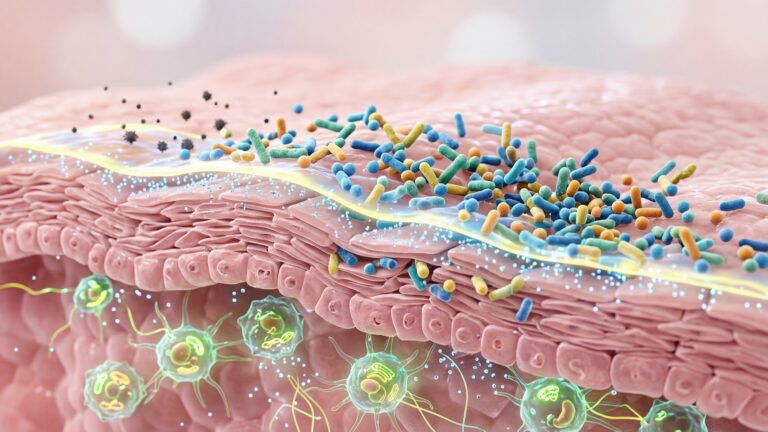
The skin microbiome is a complex ecosystem of microorganisms – bacteria, fungi and viruses – that inhabit the surface of the skin. Although we often associate bacteria with disease, most of them have protective functions. A properly balanced microbiome protects the skin from harmful pathogens, supports the protective barrier and regulates inflammatory processes.
Why is the microbiome important?

How to take care of a healthy skin microbiome?
A healthy skin microbiome is the key to natural protection, immunity and proper skin function. By taking care of it every day, you support not only a beautiful appearance, but also the skin’s resistance to external factors.
Learn about our bioactive, natural cosmetics designed to keep your skin’s microbiome healthy.
Vegetables (especially onions, garlic, leek, asparagus, cabbage, broccoli), fruits (apples, bananas, berries), whole-grain cereal products and legumes.
Kefir, natural yogurt, buttermilk, pickles (cabbage, cucumbers, kimchi), kombucha, miso, tempeh.
Oily sea fish (salmon, mackerel, sardines), flaxseed, chia seeds, walnuts.
Green tea, cocoa (bitter), olive oil, berries, pomegranates, and spices (turmeric, ginger, cinnamon).
Preferably diverse (plant and animal origin).
Marching in place or light jogging – 3 min, shoulder, hip, wrist circulations – 2 min, gentle leg sweeps and trunk twists – 3-5 min.
The goal: moderate intensity, cardiovascular support, no excessive sweating on the skin of the face and back.
Stretching legs, back, shoulders. Deep breathing – calms and reduces stress.

Many people treat toner as an unnecessary expense or “just water.” Meanwhile,…
For years we tried to kill all the bacteria on our face…

The skin is the largest human organ and the first line of…
Sign up for the MCS Laboratory newsletter. Get a 10% discount code for your first purchase and access to our experts’ knowledge base.