Atopic dermatitis
Atopic dermatitis, also known as eczema, is a chronic skin disease whose main symptom is persistent itching and inflammation. In the course of AD, the skin becomes dry, red, and it is not uncommon for blisters or scabs to appear. The disease has an immunological and genetic basis – in people with AD, the skin barrier works improperly, facilitating the penetration of allergens, microorganisms and irritants.
AD often co-occurs with other atopic diseases, such as asthma or hay fever, indicating the systemic nature of the immune disorder. Symptoms can be exacerbated by stress, temperature changes, food allergens or contact with chemicals and detergents.
Although AD is a chronic disease, proper skin care, avoidance of triggers for exacerbations and use of topical or general therapies can significantly improve a patient’s comfort. Modern research also emphasizes the role of diet, the skin microbiome and new biologic therapies in controlling the disease’s symptoms.

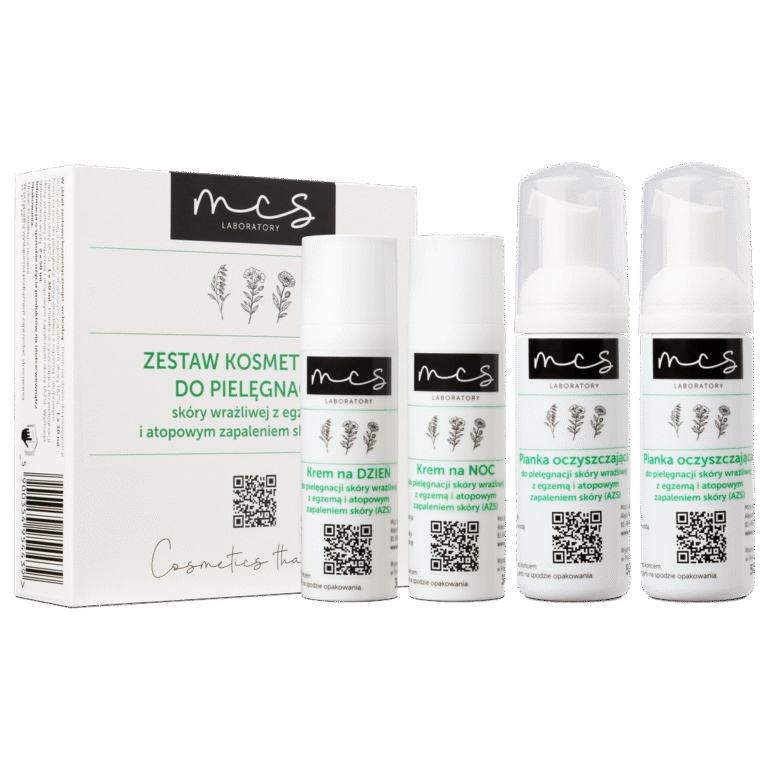
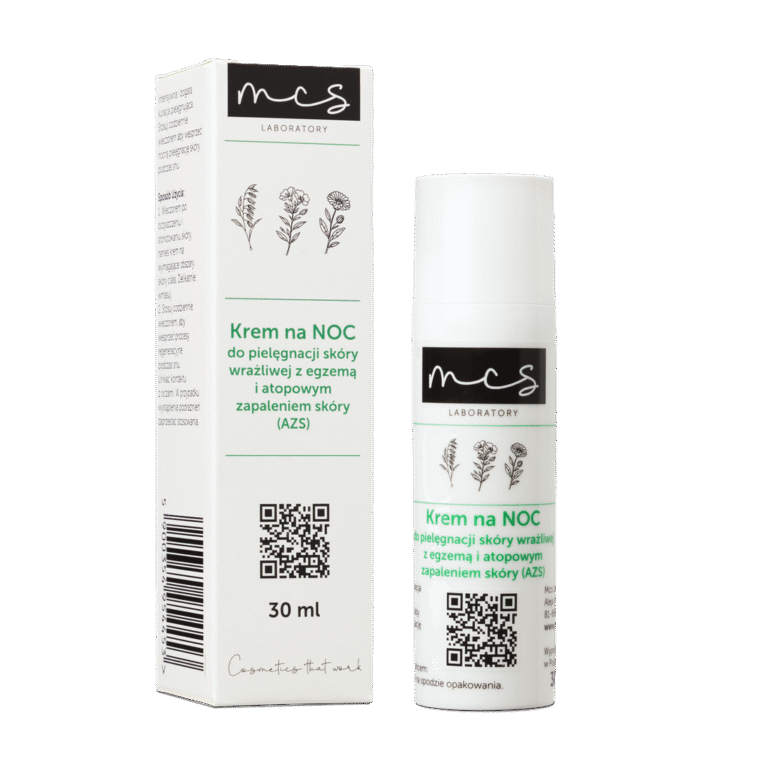
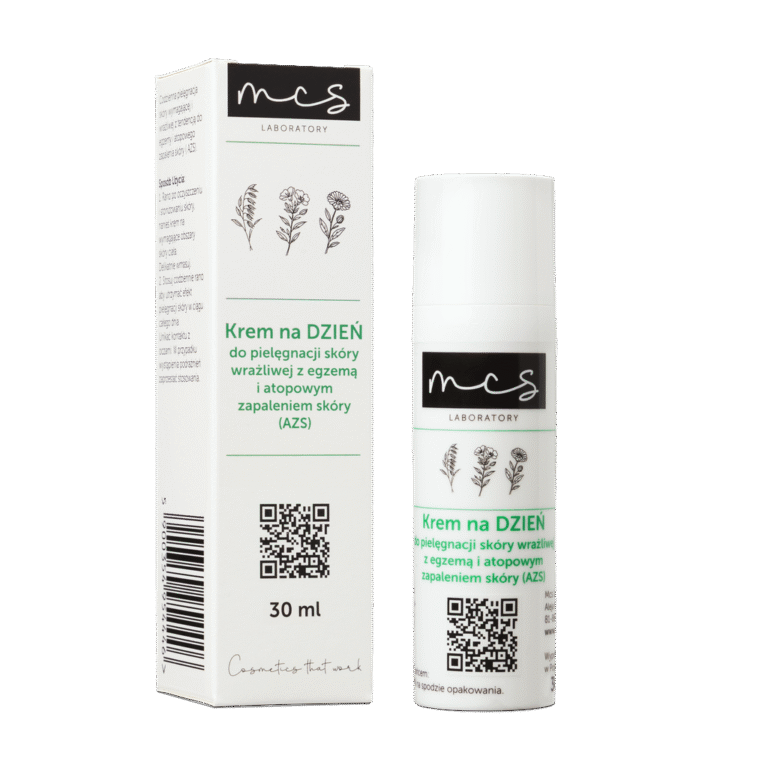
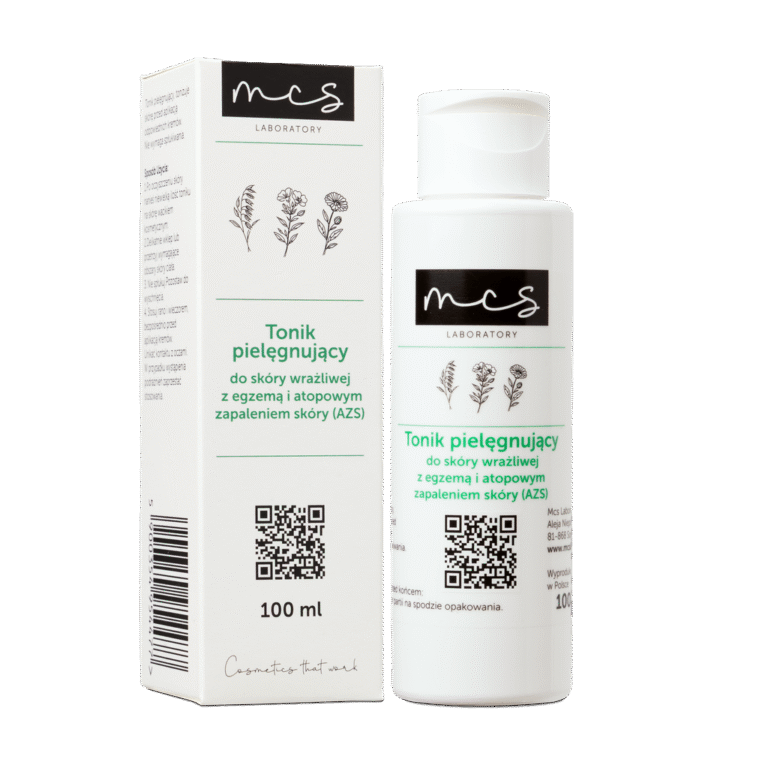
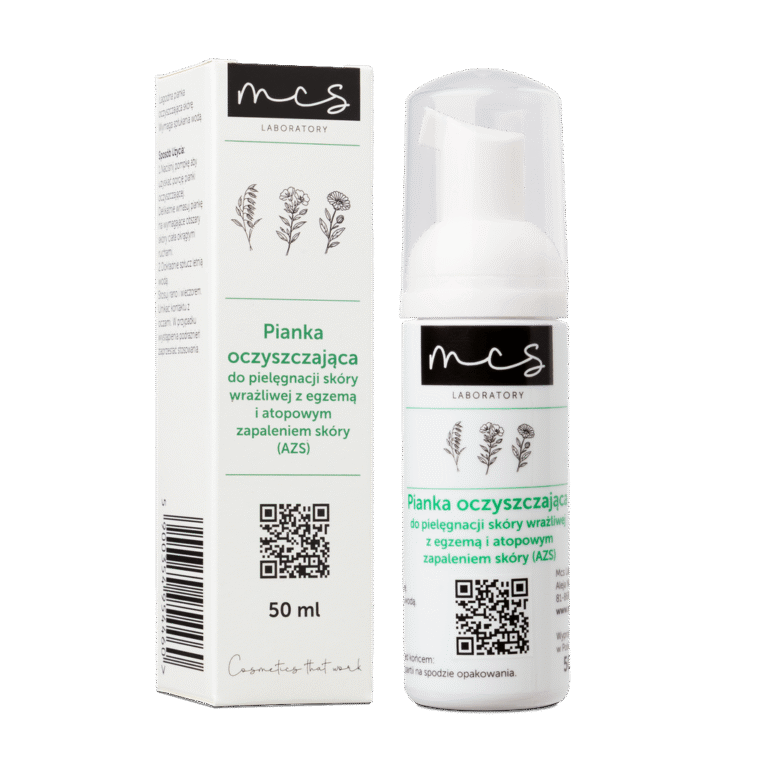
Our line of cosmetics for atopic dermatitis
Meet bioactive, natural cosmetics designed for atopic skin
Here are dietary and supplementation recommendations for people with AD (Atopic Dermatitis) and a sample one-day menu
🥗 Dietary assumptions for people with AD.
Recommended products:
- Sources of omega-3 fatty acids: flaxseed, flaxseed oil, fatty fish (salmon, mackerel, sardines)
- Anti-inflammatory foods: leafy vegetables, broccoli, berries, turmeric, ginger
- Fermented products (if well tolerated): pickles, coconut yogurt, kefir
- Products rich in zinc, vitamin A, E, D: pumpkin seeds, carrots, sweet potatoes, almonds
- Protein sources: turkey meat, rabbit, eggs (if not allergenic), tofu, lentils
- Gluten-free products: rice, quinoa, amaranth
Products to avoid:
- Cow’s dairy (a common allergen)
- Gluten (especially wheat) – if intolerance is suspected
- Sugar and highly processed foods
- Nuts and eggs – if there is a risk of allergy
- Alcohol, caffeine
- Artificial additives, dyes
💊 Example of supplementation for eczema
After consultation with your doctor or nutritionist – suggested list below:
Omega-3 (EPA/DHA)
Action
Reduce skin inflammation
Dosage (example)
min. 1000 mg per day
Reduce skin inflammation
Dosage (example)
min. 1000 mg per day
Probiotics
Action
Support intestinal microflora
Dosage (example)
Lactobacillus rhamnosus GG, Bifidobacterium
10-20 billion CFU daily
Support intestinal microflora
Dosage (example)
Lactobacillus rhamnosus GG, Bifidobacterium
10-20 billion CFU daily
Zinc
Action
Supports skin regeneration
Dosage (example)
15-30 mg daily
Supports skin regeneration
Dosage (example)
15-30 mg daily
Vitamin D3
Action
Supports immune system, reduces inflammation
Dosage(example)
1000-2000 IU daily (or more according to 25(OH)D levels)
Supports immune system, reduces inflammation
Dosage(example)
1000-2000 IU daily (or more according to 25(OH)D levels)
Vitamin E
Action
Antioxidant, promotes skin healing
Dosage (example)
100-200 IU daily
Antioxidant, promotes skin healing
Dosage (example)
100-200 IU daily
Biotin and vitamin B6
Action
Promote skin regeneration and antipruritic action
Dosage (example)
as needed
Promote skin regeneration and antipruritic action
Dosage (example)
as needed
📅 Sample one-day menu for a person with AD.
I Breakfast
Oatmeal made of millet on plant milk (e.g. oat milk)
Addition: spoonful of flaxseed, blueberries, banana
Green tea
Addition: spoonful of flaxseed, blueberries, banana
Green tea
Second Breakfast
Smoothie: kale, kiwi, apple, flaxseed oil, coconut water
Dinner
Cooked turkey fillet with herbs
Unroasted buckwheat groats
Cooked broccoli and carrots
Arugula salad with olive oil and pumpkin seeds
Unroasted buckwheat groats
Cooked broccoli and carrots
Arugula salad with olive oil and pumpkin seeds
Afternoon snack
Carrots and hummus
Nettle or calendula tea
Dinner
Pumpkin cream soup with ginger and coconut milk
Roasted quinoa with zucchini and herbs
Training at AZS
For people with atopic dermatitis (AD), training can be beneficial, but it’s worth paying attention to a few important points so as not to aggravate the skin condition. Here are tips and suggestions:
Choosing the type of activity
- Low to moderate intensity cardio workout – walking, biking, swimming in a pool with proper water disinfection.
- Strength exercises – light dumbbells, resistance bands, functional training, preferably in air-conditioned, airy rooms.
- Yoga and stretching – improve flexibility and reduce stress, which can exacerbate AD.
Training conditions
- Avoid overheating your skin – excessive sweating can aggravate itching and irritation.
- Clean, breathable clothing – preferably cotton or technical materials that wick away sweat.
- Shower right after your workout – use a mild, moisturizing gel or lotion for atopic skin.
Intensity and frequency
- Gradually increase the intensity – start with 20-30 minutes, 3-4 times a week.
- Observe your skin’s reaction – if there is increased redness or rash after a workout, reduce the intensity or change the type of exercise.
Additional tips
- Moisturize the skin before and after training – creams or emulsions for atopic skin.
- Avoid chlorinated water if it irritates – some people with AD react badly to the pool.
- Proper diet and hydration – can promote skin regeneration and reduce inflammation.
Here is a sample one-day general workout for a person with AD that is safe, strengthens the body and is also gentle on the skin:
One-day general training (about 45-50 min)
- Warm-up – 5-7 min
- Marching in place or on a treadmill (light intensity)
- Shoulder and hip circles
- Gentle squats without a load
- Cardio – 15 min
- Stationary bicycle or orbiter at a moderate pace or
- Fast walking on a treadmill
The goal: to improve performance, not to sweat excessively.
- Strength exercises (Full Body) – 20 min
- Squats against a wall or with a light weight – 2 series of 12 repetitions
- Push-ups on your knees or against the wall – 2 series of 10-12 repetitions
- Rowing with a dumbbell or resistance band – 2 series of 12 repetitions
- Arm raises with light weight – 2 series of 12 repetitions
- Hip bridges – 2 series of 12 repetitions
- Stretching / relaxation – 5-10 min
- Stretching legs, back and arms
- Relaxing positions like the child’s position or a gentle twist of the torso
- Deep breathing
- After training
- Quick shower, gentle gel/emulsion for atopic skin
- Moisturize your skin with an AD cream
Skin problems require the possibility of professional consultation with a specialist of your choice. The content on this site is for informational purposes only and does not constitute a medical diagnosis. Before taking any action to eliminate a skin problem, we suggest a consultation: