Hard water and hot baths—the silent killers of the lipid barrier in eczema and atopic dermatitis. How can you safely wash atopic skin? That feeling of extreme tightness, a burning sensation, and a sudden, irresistible urge to scratch your whole body? If you have atopic dermatitis (AD), you know this feeling all too well right after stepping out of the shower. Daily hygiene, which should bring relief, becomes a major challenge. Why can plain water so drastically aggravate the symptoms of the condition?
Silent Killers – Temperature and Ions
Due to its inherent hypersensitivity and chronic inflammation, your skin is unable to maintain adequate lipid levels. It acts as a “leaky barrier,” and when you treat your skin with the “wrong kind of water,” even this already compromised protective layer is further stressed and damaged.- Hot water: It warms the skin and literally “dissolves” and washes away essential lipids (ceramides, cholesterol, and fatty acids), leaving it completely vulnerable.
- Hard water: It is rich in calcium and magnesium ions, minerals that, when in contact with damaged, atopic skin, act as irritants, causing micro-inflammation. Furthermore, hard water has a high, alkaline pH, which creates an ideal environment for harmful bacteria (including Staphylococcus aureus).
The Golden Rules of Bathing for People with Atopic Dermatitis
To make bathing less of a painful experience, you need to adjust the conditions. The water should be only lukewarm (about 32–34°C), and the shower itself shouldn’t last longer than 5 minutes. Forget about rough sponges, washcloths, and vigorously rubbing your body with a towel—you should only gently pat your skin dry, applying the towel one spot at a time.The Crucial 3 Minutes and the Importance of Proper Cleansing
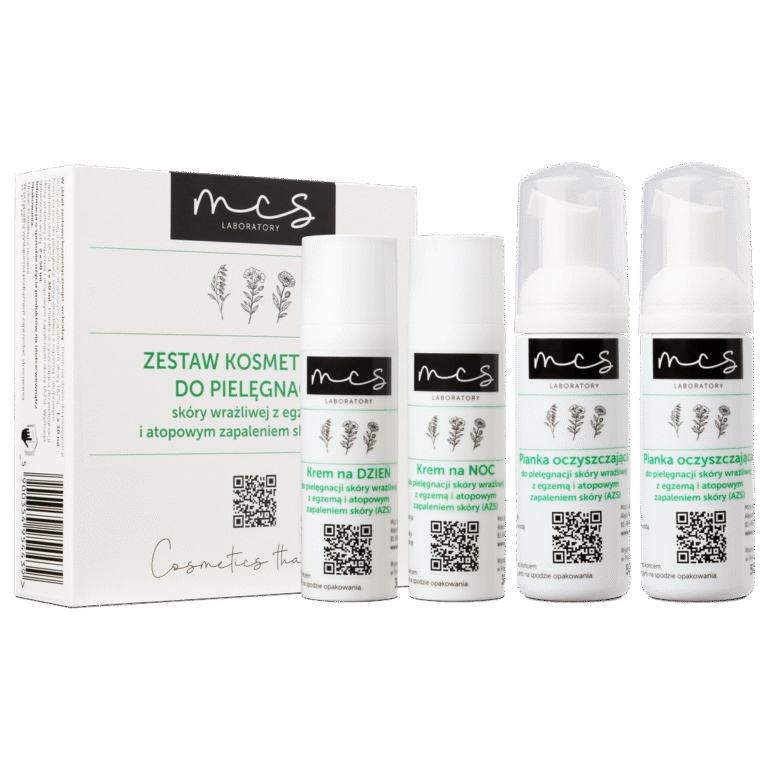
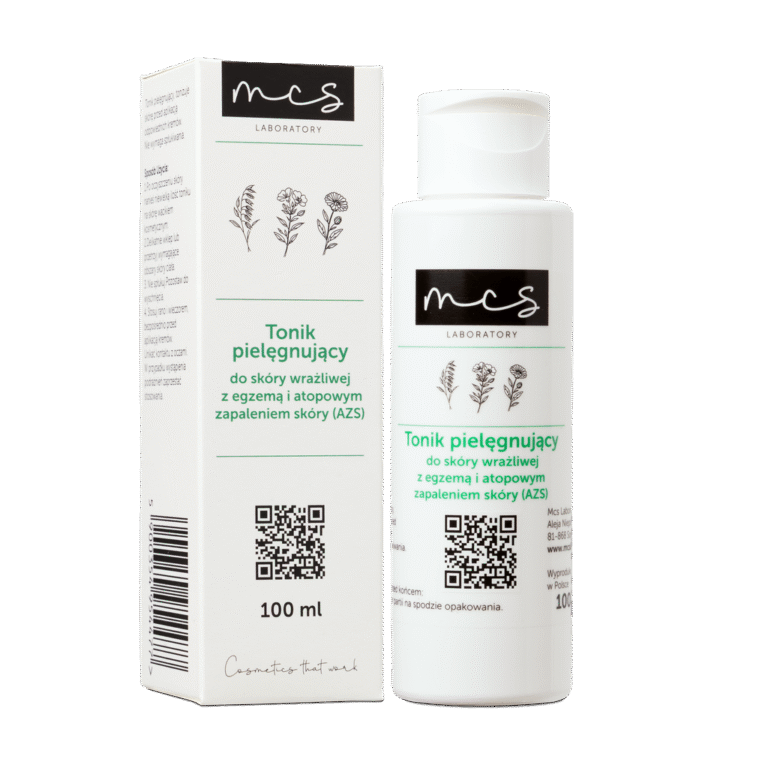
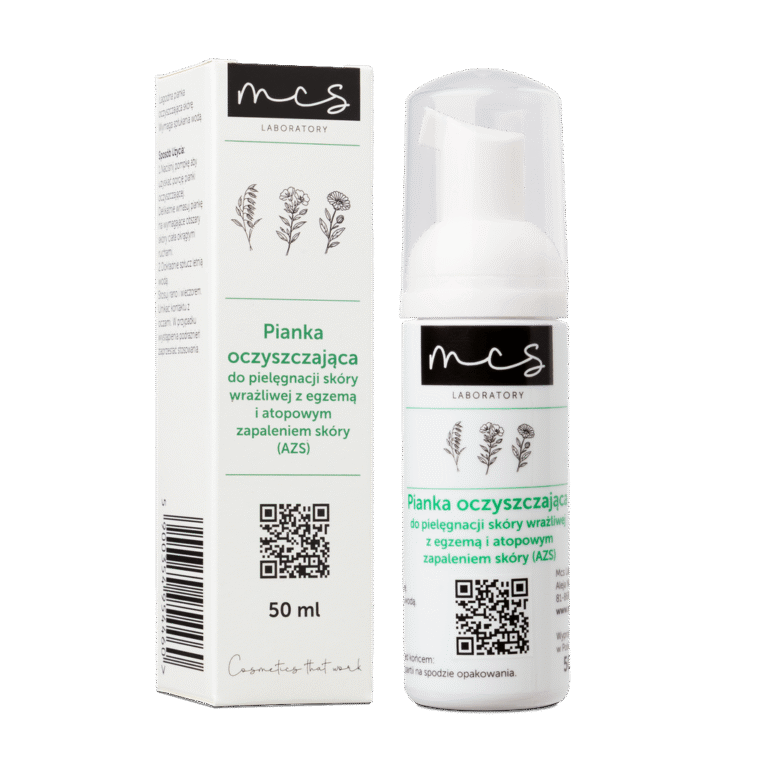
Success in treating atopic dermatitis depends on what you use to wash your skin and what you do immediately after turning off the water. Traditional shower gels are based on strong detergents (such as SLS, an aggressive surfactant responsible for the product’s intense lather), which drastically exacerbate dryness and damage the microbiome. This is where targeted skincare is needed.That is why, at MCS Laboratory, the foundation of the line for skin with eczema and atopic dermatitis is a dedicated cleansing foam for the care of sensitive skin with eczema and atopic dermatitis. Its rich blend of carefully selected active ingredients allows for the thorough removal of allergens and impurities, while also protecting the skin from drying out during the cleansing process. To immediately neutralize the negative effects of hard water, it’s a good idea to add a dedicated Soothing Toner for sensitive skin with eczema and atopic dermatitis to your routine. Applied after cleansing, it instantly restores the skin’s natural acidic pH (which harmful bacteria cannot tolerate).
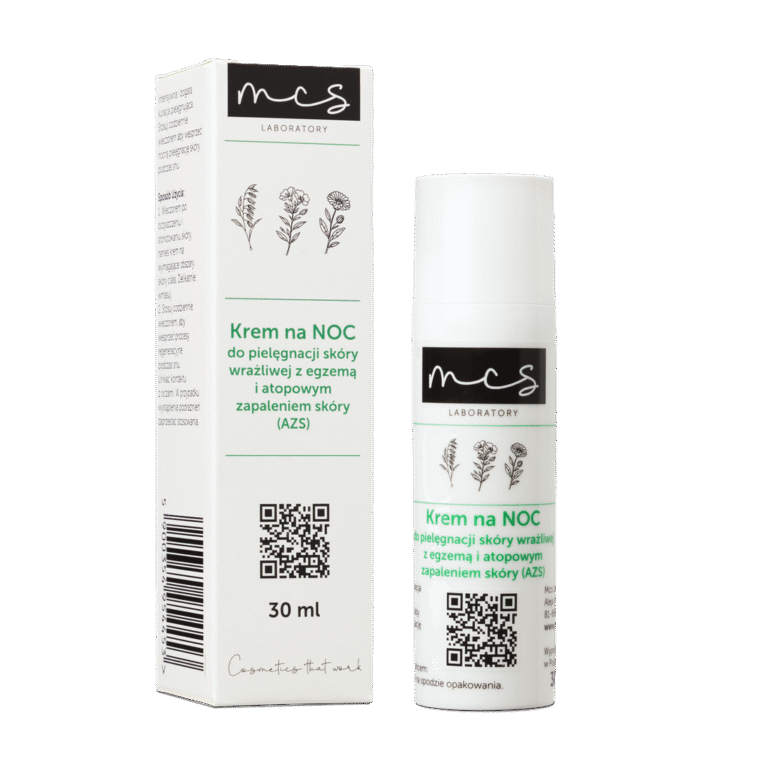
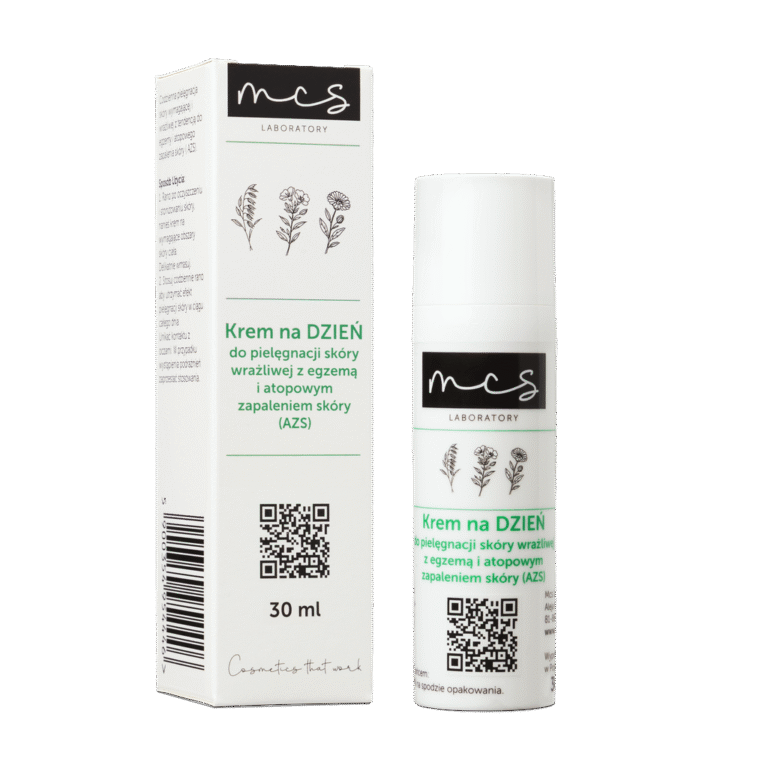
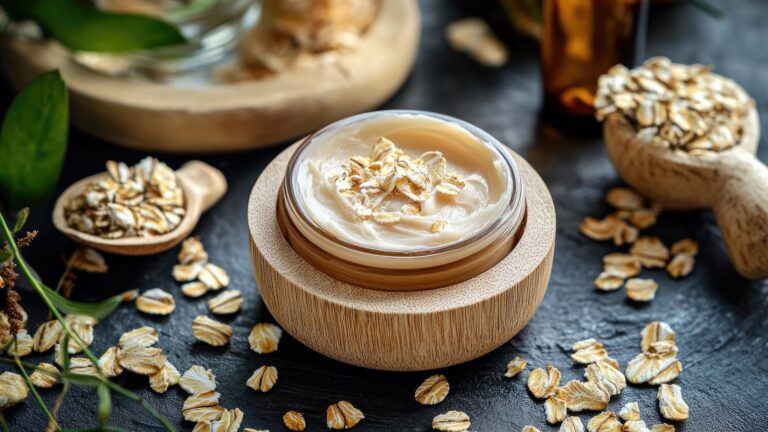
Summary: Remember the “3-minute rule”—this is the time when the skin is most receptive to absorption. Immediately after using the toner, apply an occlusive layer: Day Cream or the richer Night Cream from our skincare set for sensitive skin with eczema and atopic dermatitis. This is the only way to “lock in” moisture in the epidermis and drastically reduce the itching of dry skin after bathing.
This information is for educational and cosmetic purposes only and is not intended to replace professional medical advice, diagnosis, or treatment.