Your wardrobe and bedding. Friends or hidden enemies of atopic skin? The battle for healthy skin in atopic dermatitis (AD) rages around the clock. You put a tremendous amount of effort into thorough cleansing and applying high-quality skincare products. Unfortunately, all that effort may not yield the desired results if you wear the wrong clothes or underwear, or use the wrong bedding.
Why are textiles so critical for atopic skin?
No coating = mechanical friction. Healthy skin has a thick hydrolipid barrier that acts as a natural “coat,” allowing clothing to glide smoothly over the body. Atopic skin lacks this coat. As a result, every movement in “rough” clothing rubs against the exposed skin, causing micro-injuries and redness, and triggering symptoms of the condition and itching.Your Skin’s Hidden Enemies
- Wool and thick knits: Due to their texture (coarse fibers), they are strictly prohibited for people with atopic dermatitis. They cause immediate mechanical irritation.
- Polyester and synthetic fabrics: They interfere with thermoregulation. Under synthetic fabrics, the skin sweats much more quickly, and sweat (which is rich in salts) is one of the strongest triggers of itching and irritation in atopic dermatitis.
- Detergents: Residues from strong laundry detergents and fabric softeners become embedded in the fibers of clothing and penetrate the skin throughout the day.
Your Skin’s Best Friends
You should always choose smooth, breathable, and natural fabrics. For sleeping (when your body temperature rises), cool silk or high-quality, soft cotton is ideal. During the day, opt for linen, cotton, and bamboo clothing, as well as loose-fitting styles. Also, remember that it’s absolutely essential to rinse your laundry twice to remove any residue from detergents and fabric softeners.Building the Right Layer
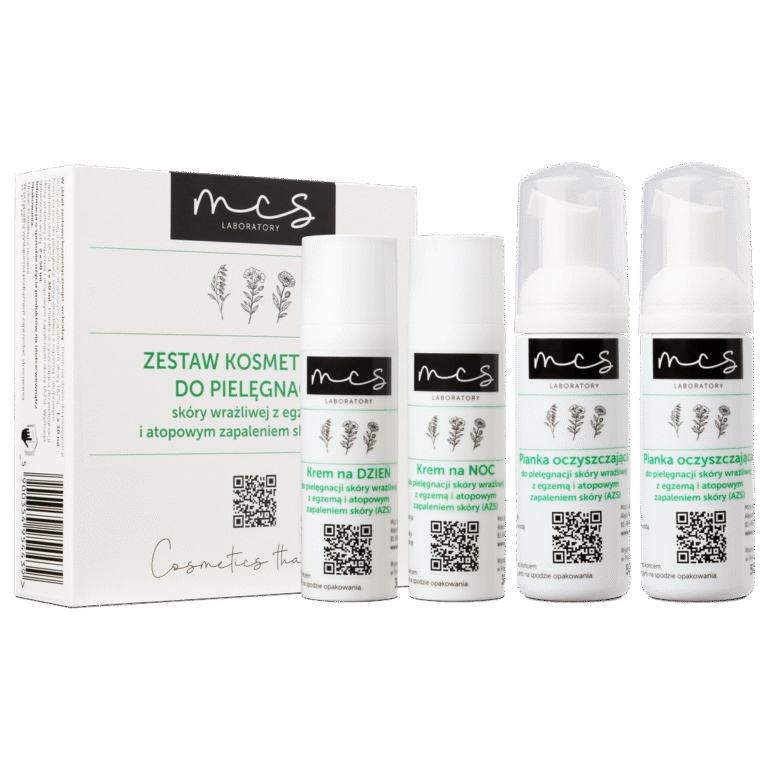
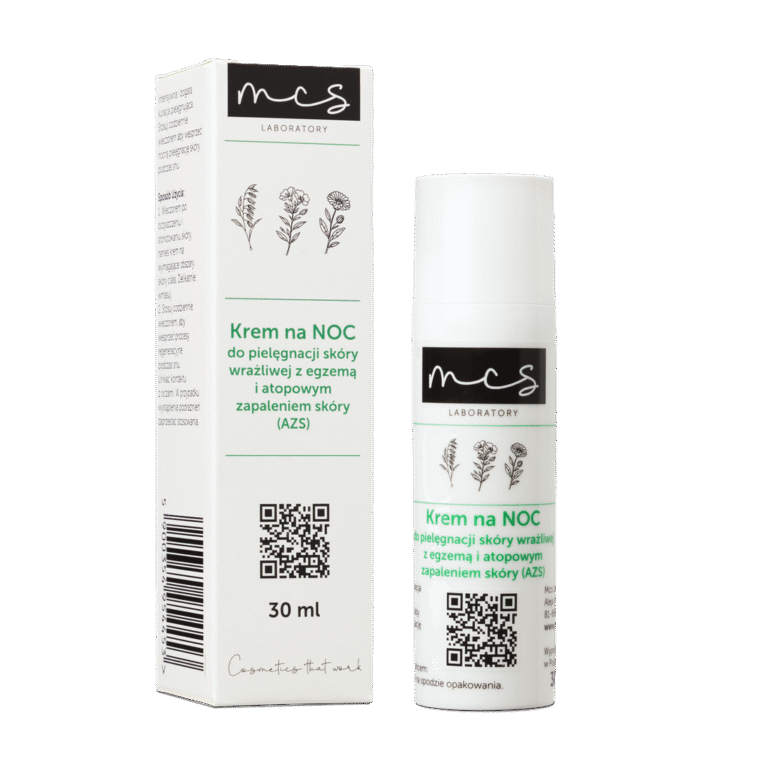
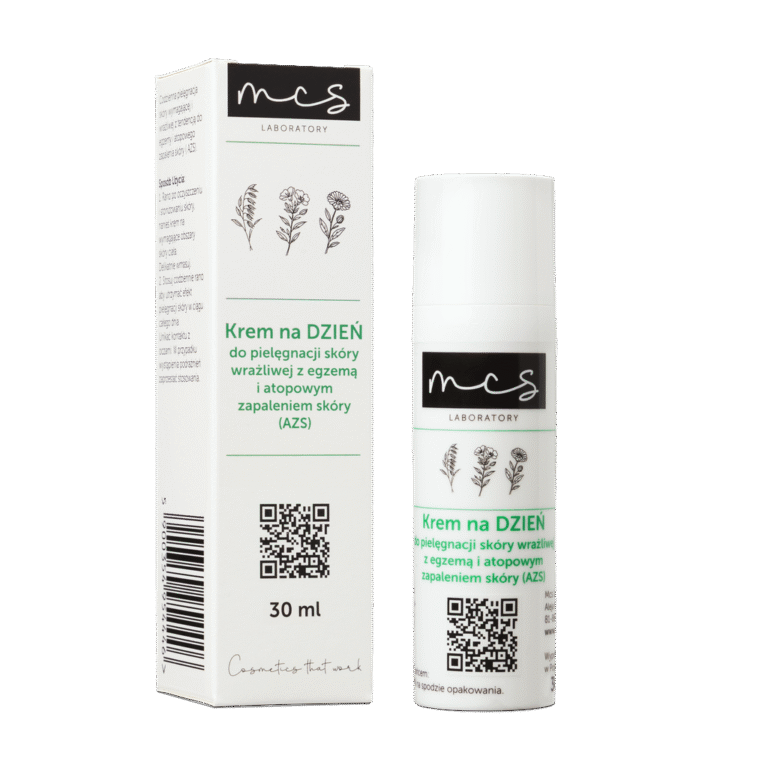
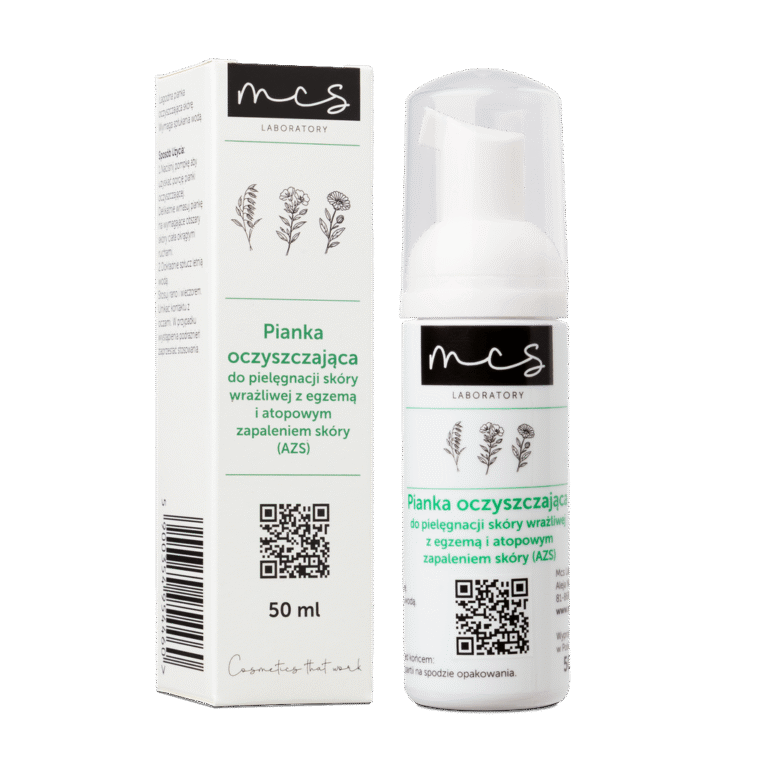
Choosing the right fabrics is one thing, but atopic skin needs to be reinforced with a protective layer that helps restore the lipid barrier.Summary: The primary purpose of MCS Laboratory’s Day Cream for Sensitive Skin with Atopic Dermatitis is to create a mechanical protective layer. By applying it in the morning (after gently cleansing and toning your skin), you’re wrapping your skin in an invisible, occlusive “underlayer.” This cream replenishes the lipid barrier and soothes irritation, ensuring that clothing glides smoothly over the protected skin rather than catching on “dry” patches and irritating nerve endings. It’s your all-day protective barrier for dry, irritated, and itchy skin.
This information is for educational and cosmetic purposes only and is not intended to replace professional medical advice, diagnosis, or treatment.